Discover how Solis BioDyne’s EvaGreen® qPCR dyes offer a stable, non-toxic, and environmentally friendly alternative to traditional options—helping your lab reduce its carbon footprint without compromising on performance.
Many scientists are researching pollution, carbon footprints, and how to reduce the amount of plastic used, among other topics. However, at the same time, research labs use different chemicals and plastics every day, and it is often challenging to change the workflow in order to avoid contamination.
That being said, there are small steps that can be taken to be more mindful of the environment, even when working in strictly set conditions. One of these is choosing the right products for your experiments, as reagents often have different compositions even when they can be used for the same applications.
When it comes to qPCR, the most popular choice for dye is SYBR® Green. There are, however, better options that may not be as popular yet, but are worth considering. One of them is EvaGreen®, which is spectrally similar to SYBR® Green, so there is no need to change any optical settings when using it [1]. EvaGreen® is very stable at room temperature and also under PCR conditions [1]. It is less inhibiting concentration-wise – it’s possible to increase the dye’s concentration to increase fluorescence without messing up the reaction [1]. This additionally enables better high-resolution melt analysis and multiplexing, which are less reliable when using SYBR® Green [1]. Furthermore, EvaGreen® dye has less background than SYBR® Green due to its novel “release-on-demand” DNA-binding mechanism [2]. Most importantly, EvaGreen® is also considered less toxic and more environmentally safe than SYBR® Green [2].
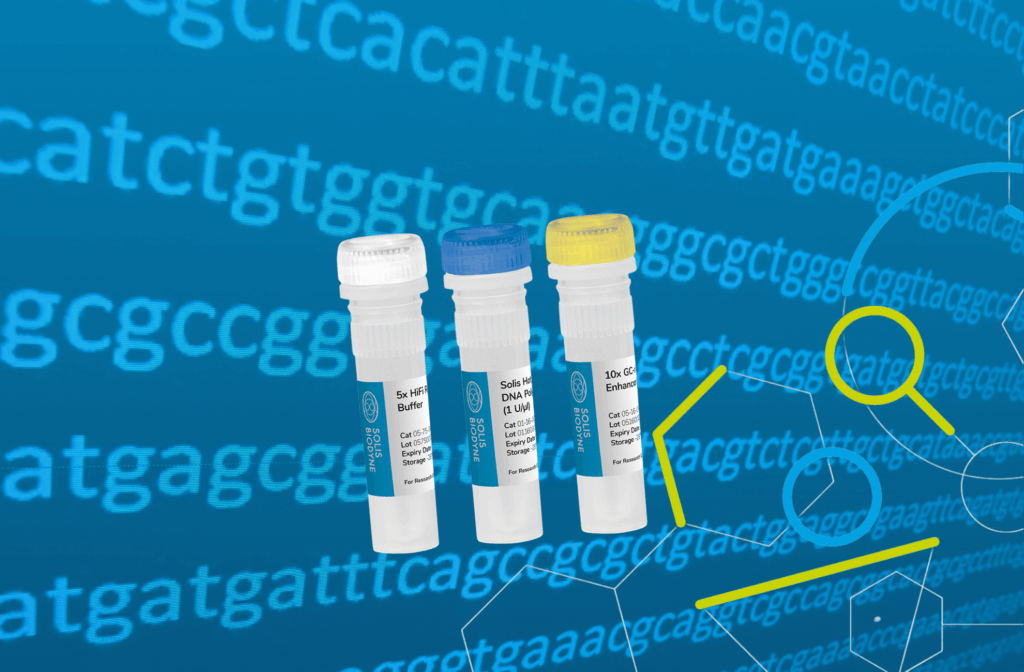
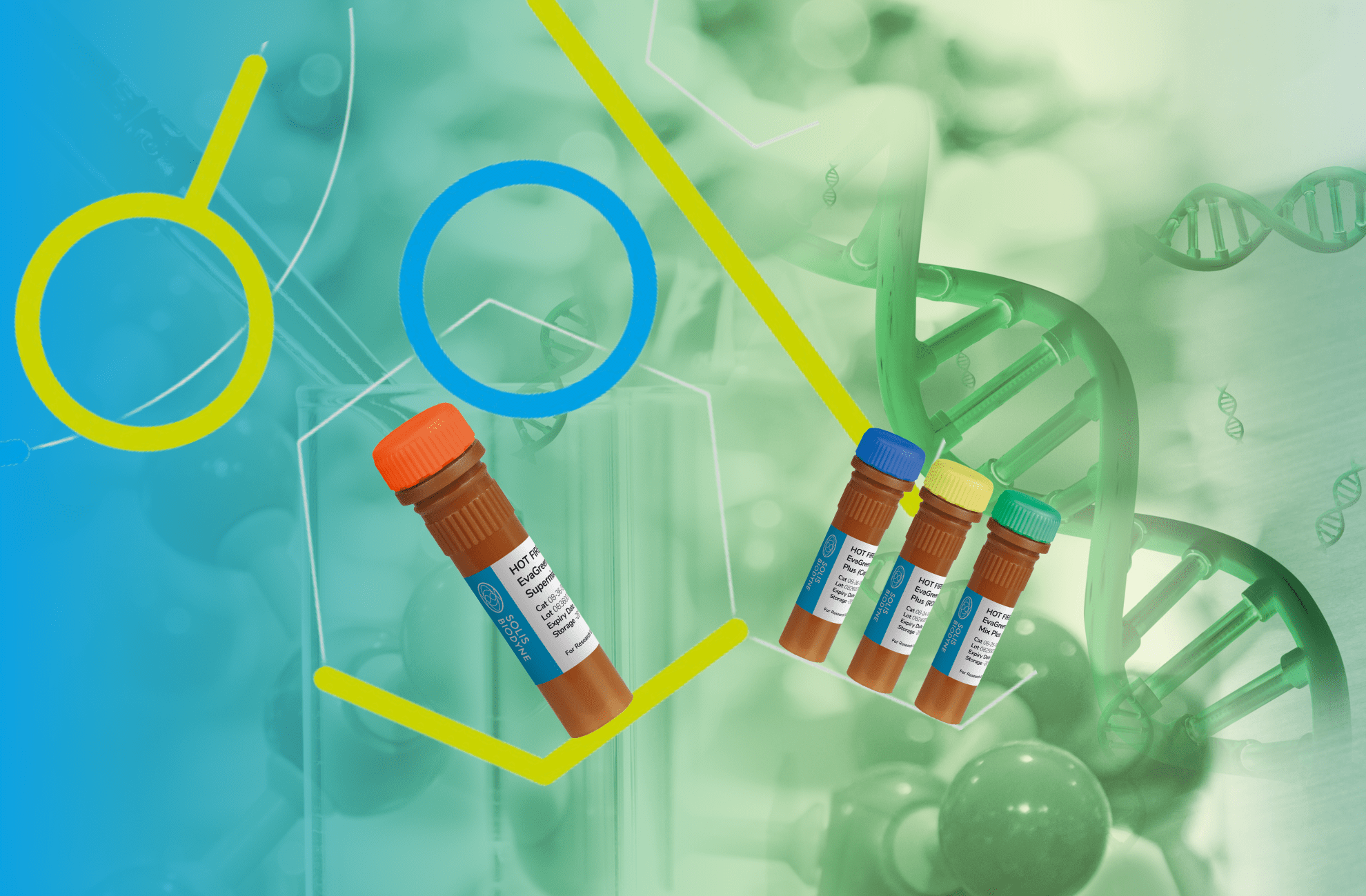
Solis BioDyne has been developing and producing dye-based qPCR products since 2009. Their dye of choice has been EvaGreen® from the start because of its higher stability and safer-for-the-environment features, which align best with the company’s standards.
The stability feature of the products allows setting up experiments without ice, making the workflow much easier. In addition, the products can be sent in a small envelope instead of using big boxes and dry ice, which significantly lowers the shipping cost and your carbon footprint.
Products produced in Solis BioDyne are also non-toxic and environmentally safe, so there is no need to worry about discarding them after your experiment. (However, we do not recommend drinking them.)
So, choose to go green with EvaGreen®!
[1] Mao, F., Leung, WY. & Xin, X. Characterization of EvaGreen and the implication of its physicochemical properties for qPCR applications. BMC Biotechnol 7, 76 (2007). https://doi.org/10.1186/1472-6750-7-76
[2] Selvaraj V., Maheshwari Y., Hajeri S., Yokomi R. (2019) Droplet Digital PCR for Absolute Quantification of Plant Pathogens. In: Khurana S., Gaur R. (eds) Plant Biotechnology: Progress in Genomic Era. Springer, Singapore. https://doi.org/10.1007/978-981-13-8499-8_25


PCR | Enzymes and Master Mixes | qPCR: Fast, Stable at RT, Tolerant to inhibitors | cDNA | RNase Inhibitors | dNTP|LAMP | Loading Dyes | Nucleotides | DNA Ladders
We gladly support you by keeping you updated on our latest products and developments